Master Proven Navigation Techniques for Post-Disaster Recovery
What Key Elements Are Essential for Effective Post-Disaster Navigation?

Post-disaster navigation involves a comprehensive array of strategies and tools tailored for efficiently traversing and managing areas affected by catastrophic events. This vital element of disaster management emphasizes the safety of both responders and impacted communities, enabling them to navigate hazardous environments with increased precision. The fundamental components of post-disaster navigation encompass:
- Assessment of the affected landscape
- Mapping secure transit routes
- Identification of critical resources and services
- Coordination with emergency responders
- Utilization of advanced technology for real-time situational awareness
- Community engagement to leverage local expertise
- Training and preparedness initiatives for responders
These elements collaboratively establish a robust navigation framework adaptable to the unpredictable nature of post-disaster scenarios. Providing responders with access to essential tools and information significantly boosts the chances of successful navigation and effective recovery operations.
What Are the Must-Have Technologies for Post-Disaster Navigation?
Technological innovations are crucial in enhancing the effectiveness of post-disaster navigation. Various tools empower responders to swiftly assess situations, chart effective routes, and maintain reliable communication. The technologies pivotal to the navigation process include:
- Global Positioning Systems (GPS) for precise location tracking
- Drones for aerial mapping and surveillance
- Satellite imagery for comprehensive terrain analysis
- Mobile applications for real-time updates and information dissemination
- Geographic Information Systems (GIS) for advanced data visualization
- RFID tags for effective resource tracking and management
- Emergency communication systems for reliable connectivity
These technologies facilitate the rapid evaluation of disaster-stricken regions, providing critical insights that can significantly influence decision-making processes. For instance, drones offer aerial perspectives of areas that are difficult to access on foot, while GIS technology aids in analyzing spatial data to determine the safest evacuation routes or distribution channels for vital resources.
Why Is Precise Mapping Indispensable for Effective Navigation?
Precise mapping serves as a fundamental pillar of effective post-disaster navigation, enabling the identification of safe routes and essential locations like shelters, hospitals, and supply depots. Often, using outdated or incomplete maps can lead to perilous miscalculations. For example, following the 2010 earthquake in Haiti, the employment of updated mapping technologies allowed relief agencies to locate stranded individuals urgently needing assistance.
Furthermore, advanced mapping techniques such as LiDAR and remote sensing have been instrumental in creating detailed topographic maps that illustrate changes in terrain resulting from disasters. These maps are not only vital for navigation but also crucial for effective recovery planning. Insights gained from these mapping efforts have driven improvements in post-disaster navigation practices, underscoring the importance of accuracy and real-time data in disaster response strategies.
Recognize and Address Obstacles in Post-Disaster Navigation

What Challenges Are Commonly Faced in Post-Disaster Navigation?
Navigating through post-disaster landscapes presents numerous challenges. Frequent obstacles include severely damaged infrastructure, communication breakdowns, and the absence of real-time data. Infrastructure often sustains extensive damage, with roads blocked, bridges rendered unusable, and buildings collapsed, making conventional navigation methods not only ineffective but also hazardous.
Moreover, communication barriers further complicate recovery efforts. After disasters, cellular networks may become inoperative, and traditional communication methods can quickly lose reliability. Additionally, the lack of real-time data can cause significant delays in response times, impairing the ability of navigators to make informed decisions. These challenges necessitate the implementation of innovative and adaptable strategies to ensure safe navigation and effective responses in areas devastated by disasters.
How Can Communication Barriers Be Effectively Overcome?
Effective communication is vital for coordinating navigation efforts during and after a disaster. To mitigate communication barriers, various strategies can be utilized. Employing satellite phones ensures that individuals can maintain contact, regardless of local cellular network reliability. Establishing temporary communication networks, such as mesh networks or enlisting the help of amateur radio operators, can facilitate the exchange of information among responders.
In addition, training individuals on emergency communication protocols can significantly improve coordination during crises. Community workshops dedicated to emergency communication techniques can enhance resilience and ensure that residents are equipped to disseminate information effectively. By harnessing technology and community resources, communication gaps can be bridged efficiently, leading to improved navigation and response efforts.
How to Navigate Effectively Through Infrastructure Damage?
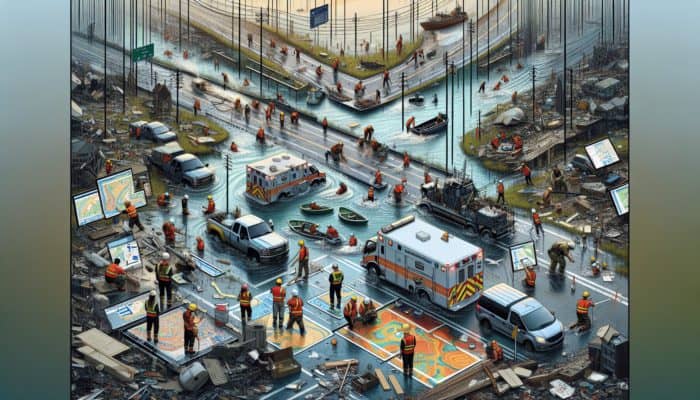
Infrastructure damage poses a significant barrier to navigating post-disaster. Responders must frequently identify alternative routes when primary roads become impassable. By employing technology like GPS and mapping applications, they can discover alternative paths that may not be immediately obvious.
Temporary solutions, such as deploying portable bridges or utilizing ferries in flood-affected areas, can facilitate movement across compromised landscapes. Collaborating with local authorities and agencies offers invaluable insights into the current state of infrastructure, enabling navigators to adapt their strategies in real-time. By prioritizing adaptability and resourcefulness, navigators can effectively confront the challenges presented by infrastructure damage during disaster scenarios.
What Significance Does Real-Time Data Hold in Navigation?
Real-time data greatly enhances post-disaster navigation by providing critical insights into current road conditions and possible hazards. Technologies that deliver immediate information, such as traffic monitoring systems and drone imagery, are integral to improving situational awareness.
For instance, in the aftermath of Hurricane Harvey in 2017, responders utilized real-time data to assess flooding conditions and adjust team deployments accordingly. By integrating various data sources, navigators can effectively plan routes that prioritize safety and efficiency. This data-driven approach fosters informed decision-making and agile responses to the rapidly changing conditions typically encountered in post-disaster environments.
Insights from Experts on Enhancing Post-Disaster Navigation
What Best Practices Are Recommended by Experienced Navigators?
Veteran navigators offer invaluable insights into the strategies that yield the most effective results for traversing disaster zones. Recommended best practices include conducting thorough pre-disaster planning, which involves developing a comprehensive understanding of the geography of the area, identifying critical resources, and establishing robust communication protocols before a disaster strikes.
Another actionable step is to engage with local communities to tap into their knowledge of the region. Involving community members in the planning process enhances situational awareness and optimizes resource allocation. Moreover, leveraging technology to keep maps continuously updated and regularly training responders in navigation protocols ensures ongoing preparedness. Organizations like the Red Cross often conduct drills to reinforce these practices, equipping responders with the skills necessary to navigate post-disaster landscapes successfully.
What Recent Research Findings Are Shaping Navigation Techniques?
Recent studies in the field of post-disaster navigation have concentrated on integrating artificial intelligence and machine learning to analyze data patterns and predict the most effective routes in dynamic situations. This advancement bestows responders with predictive capabilities that enhance their situational awareness and improve decision-making processes.
Research indicates that incorporating community feedback into navigation strategies leads to more effective disaster responses. Engaging local knowledge not only improves navigation but also bolsters community resilience. As research continues to evolve, these findings will shape future practices, emphasizing the importance of a multifaceted approach that combines technology with human insights in post-disaster navigation.
What Case Studies Showcase Successful Navigation Strategies?
Case studies provide rich insights into effective navigation strategies employed in the aftermath of disasters. A notable example is the navigation efforts during the 2011 Tōhoku earthquake and tsunami in Japan, where first responders skillfully utilized a combination of satellite imagery and local knowledge to assess damage and establish routes for search and rescue missions.
Another compelling case study is the response to the 2015 Nepal earthquake, where deploying drones significantly expedited the mapping of affected areas. This innovative technology allowed responders to identify critical locations for aid distribution while navigating hazardous terrains. These real-world examples underscore the necessity for adaptive strategies and technological integration to enhance navigation efficacy following disasters.
How Are Technological Innovations Revamping Navigation Tools?
Technological advancements have profoundly improved navigation capabilities in post-disaster scenarios. Emerging tools, such as augmented reality (AR) applications, allow navigators to overlay critical information onto their surroundings in real time. This technology can provide directions, highlight hazards, and identify resources, vastly improving situational awareness.
Additionally, the development of mobile applications tailored for disaster response facilitates seamless communication and data sharing among teams. These advancements not only enhance navigation efficiency but also promote a more coordinated approach to disaster recovery. As new technologies emerge, their integration into navigation practices will lead to more effective and safer navigation strategies in the face of disasters.
Key Resources and Tools for Efficient Navigation in Post-Disaster Scenarios
What Essential Navigation Equipment Should Be Utilized?
Equipping responders with the appropriate tools is essential for effective navigation in post-disaster environments. Critical navigation equipment includes:
- GPS devices for accurate location tracking
- Compasses to help orient oneself in unfamiliar areas
- Physical maps as reliable backups to digital systems
- Emergency beacons for signaling distress
- Multi-tools for various on-ground needs
- First aid kits for immediate medical emergencies
- Portable chargers to keep electronic devices powered
These tools empower responders to navigate safely and efficiently while ensuring they are well-prepared for a range of challenges that may arise in post-disaster scenarios. Adequate training on the usage of this equipment is equally critical, enabling responders to maximize the resources at their disposal.
What Software Solutions Improve Navigation Efficiency?
A variety of software solutions can significantly enhance navigation efforts in regions affected by disasters. Geographic Information Systems (GIS) provide essential mapping and spatial analysis capabilities, allowing responders to visualize data and identify crucial patterns during crises.
Moreover, mapping applications designed for offline functionality ensure accessibility even when internet connectivity is compromised. Platforms like ArcGIS or OpenStreetMap assist navigators in creating and updating maps that accurately reflect real-time conditions on the ground. By leveraging these software solutions, agencies can enhance operational efficiency and responsiveness in post-disaster navigation.
How Do Training and Preparedness Programs Enhance Navigation Effectiveness?
Robust training initiatives are fundamental for equipping individuals with the necessary skills to navigate effectively in disaster scenarios. These programs typically incorporate hands-on exercises, simulations, and real-world scenarios to develop practical skills. For instance, the FEMA Community Education and Training program empowers community members with vital navigation techniques and emergency response knowledge.
Additionally, organizations frequently collaborate with local governments to develop tailored training initiatives that address specific regional challenges. These programs benefit not only emergency responders but also empower communities to navigate effectively after disasters. By investing in training and preparedness, organizations can build a more resilient response network capable of managing future challenges.
How Is Post-Disaster Navigation Strategically Implemented?
What Initial Steps Are Involved in Assessment and Planning?
The initial phase of post-disaster navigation focuses on assessing the disaster’s impact and planning navigation routes accordingly. This assessment is crucial for determining the extent of the damage and identifying accessible pathways. For example, following Hurricane Katrina in 2005, initial assessments conducted by the National Guard proved vital in establishing safe evacuation routes for displaced residents.
Effective planning necessitates collaboration with various agencies to gather comprehensive data, ensuring that all efforts are coordinated and well-informed. Engaging local authorities and community leaders can provide additional insights into the landscape and potential hazards, enriching the planning process. By prioritizing thorough assessments, responders can develop effective navigation strategies that address the unique challenges posed by each disaster.
What Steps Are Necessary for Executing Navigation?
Post-disaster navigation involves several critical steps that ensure safe passage to intended destinations. The first step entails route planning, utilizing maps, technology, and local knowledge to identify viable paths. Responsive navigation requires real-time adjustments based on updated information regarding obstacles or hazards, enabling flexible routing.
Another key step is ensuring safe passage to destinations, which often necessitates coordination with emergency services to provide assistance and resources along the route. This may involve establishing check-in points for safety and communication purposes. By following these structured steps, navigators can create a systematic approach to effectively manage the complexities inherent in post-disaster environments.
Why Is Collaboration with Emergency Services Imperative?
Collaboration with emergency services is essential for ensuring successful navigation during disaster response efforts. Such cooperation guarantees that navigation strategies align with broader rescue and recovery operations, facilitating a cohesive response to the challenges encountered.
Regular communication with emergency services allows navigators to receive real-time updates about conditions, hazards, and operational requirements. Joint training exercises can also enhance collaboration, fostering relationships between navigators and emergency personnel. By prioritizing coordination, responders can work collectively to improve safety and efficiency in navigating disaster-affected areas.
What Benefits Are Associated with Effective Post-Disaster Navigation?
What Safety Advantages Does Effective Navigation Provide?
Effective post-disaster navigation significantly enhances safety by identifying reliable routes and avoiding potential hazards. This safety advantage is vital not only for responders but also for displaced residents who may be seeking assistance or evacuation.
By utilizing accurate maps and real-time data, navigators can steer clear of blocked roads, flooding, or other dangers. For example, during the 2019 Mozambique Cyclone Idai response, effective navigation efforts enabled rescuers to reach isolated communities safely, ultimately saving lives. Prioritizing safety in navigation bolsters overall disaster response effectiveness, reinforcing its critical role in recovery efforts.
How Does Navigation Influence Economic and Social Recovery?
Effective navigation also carries significant economic and social implications in post-disaster contexts. By ensuring access to essential services such as healthcare, food, and shelter, navigation mitigates economic losses and supports community recovery.
Additionally, facilitating movement within affected areas promotes social cohesion and enhances resilience. For instance, following the 2017 Mexico earthquake, effective navigation facilitated swift resource distribution and community engagement, thereby improving recovery efforts. By addressing both economic and social dimensions, effective navigation strategies play a pivotal role in rebuilding communities after disasters.
How Does Navigation Support Urgent Recovery Efforts?
Effective navigation directly aids critical recovery efforts following disasters. Enabling movement allows for the timely delivery of aid and resources to impacted areas. Prompt access to essential supplies helps communities initiate the recovery process more swiftly, ultimately reducing long-term impacts.
Moreover, effective navigation assists in the safe return of displaced individuals to their homes. By ensuring that secure routes are available, navigators can help restore a sense of normalcy and stability within communities. These improved recovery efforts are crucial for rebuilding lives and ensuring that communities emerge stronger and more resilient in the aftermath of disasters.
What Strategies Can Be Adopted to Enhance Post-Disaster Navigation?
What Effective Planning Techniques Can Be Implemented?
Improving post-disaster navigation necessitates the adoption of effective planning techniques. Scenario planning is a vital method that involves anticipating potential disaster situations and developing navigation strategies accordingly. This proactive approach prepares responders for a variety of challenges, ensuring they can adapt swiftly to evolving conditions.
Incorporating real-time data integration into navigation planning further enhances responsiveness. Access to current information allows for dynamic route adjustments, ensuring safety and efficiency. Training responders to effectively utilize these planning techniques equips them with the necessary skills to navigate complex post-disaster environments successfully.
How Can Community Knowledge Be Harnessed in Navigation Efforts?
Utilizing local knowledge can substantially improve navigation efforts in post-disaster scenarios. Community members often possess invaluable insights into the geography, infrastructure, and potential hazards of their areas. Involving these individuals in navigation planning fosters collaboration and strengthens response strategies.
Workshops and community meetings can serve as platforms for gathering input and sharing knowledge. This engagement not only sharpens navigation strategies but also empowers communities, fostering resilience and preparedness for future disasters. By prioritizing community involvement, organizations can significantly enhance the effectiveness of their navigation efforts.
What Is the Role of Ongoing Improvement and Feedback in Navigation?
Continuous improvement is crucial for refining post-disaster navigation strategies. Implementing feedback loops allows organizations to assess the effectiveness of their navigation efforts and identify areas for enhancement. Gathering insights from navigators, emergency responders, and community members creates a comprehensive understanding of the challenges faced during navigation.
Regular debriefing sessions after disasters enable teams to analyze successes and failures, informing future strategies. This commitment to continuous improvement ensures that navigation approaches adapt based on lessons learned from past experiences, enhancing overall effectiveness in disaster response.
What Future Trends Are Emerging in Post-Disaster Navigation?
What Innovations Are Anticipated to Transform Navigation?
The future of post-disaster navigation is poised for exciting innovations. Emerging technologies, such as AI-driven navigation systems, are expected to revolutionize how responders assess and navigate disaster-affected areas. These advancements will enhance situational awareness, leading to more informed decision-making and optimal resource allocation.
Additionally, integrating real-time data analytics into navigation systems presents the potential for predicting hazards and dynamically optimizing routes. As these innovations develop, they will provide responders with unprecedented capabilities, significantly improving navigation efficiency and safety in post-disaster scenarios.
How Will Autonomous Vehicles Reshape Navigation Efforts?
Autonomous vehicles are projected to play a pivotal role in future post-disaster navigation efforts. These vehicles can operate in hazardous environments, providing essential transportation for responders and supplies without compromising human safety.
Moreover, autonomous drones can conduct aerial assessments, transmitting vital information to navigation teams while avoiding ground obstacles. As this technology progresses, its integration into disaster response strategies has the potential to dramatically enhance operational efficiency and safety, transforming the landscape of post-disaster navigation.
What Steps Are Necessary for Future Disaster Preparedness?
Preparing for future disasters involves incorporating new technologies and strategies into navigation plans. Investing in research and development will drive innovation, ensuring that responders are equipped with state-of-the-art tools and knowledge.
Moreover, fostering partnerships among technology providers, emergency services, and communities will establish a collaborative approach to disaster preparedness. By prioritizing proactive measures and continuous training, organizations can strengthen their resilience and responsiveness to future disasters, ultimately enhancing the effectiveness of post-disaster navigation.
Frequently Asked Questions (FAQs)
What is post-disaster navigation?
Post-disaster navigation refers to the methods and tools employed to navigate and manage areas following a catastrophic event, ensuring the safe and efficient movement of responders and affected individuals.
Why is accurate mapping critical in post-disaster navigation?
Accurate mapping is essential for identifying safe routes and vital locations, enabling effective disaster response and facilitating recovery efforts.
What are common obstacles in post-disaster navigation?
Common challenges include damaged infrastructure, communication breakdowns, and a lack of real-time data, all of which complicate navigation efforts in disaster scenarios.
How can communication barriers be overcome?
Strategies include utilizing satellite phones, establishing temporary networks, and training individuals in emergency communication protocols to enhance coordination.
What technologies enhance post-disaster navigation?
Key technologies encompass GPS devices, drones, satellite imagery, GIS software, and mobile applications, which provide real-time data and mapping capabilities.
How can local knowledge aid navigation efforts?
Local knowledge offers valuable insights into the geography and potential hazards of an area, thereby improving navigation strategies and promoting community resilience.
What are the best practices for effective post-disaster navigation?
Best practices encompass thorough pre-disaster planning, engaging local communities, utilizing real-time data, and ensuring proper training for responders.
How do continuous improvement strategies work for navigation?
Continuous improvement involves implementing feedback loops to evaluate navigation efforts, analyze successes and failures, and adapt strategies for future responses.
What role do autonomous vehicles play in post-disaster navigation?
Autonomous vehicles can operate in hazardous environments, transporting responders and supplies safely, while drones can conduct aerial assessments to assist navigation.
What future trends are expected in post-disaster navigation?
Innovations such as AI-driven navigation systems and real-time data analytics will enhance situational awareness and improve navigation efficiency during disaster responses.
Join us on our journey on X!
The post Post-Disaster Navigation: Essential Strategies appeared first on Survival Bite.
The Article Essential Strategies for Post-Disaster Navigation Was Found On https://limitsofstrategy.com